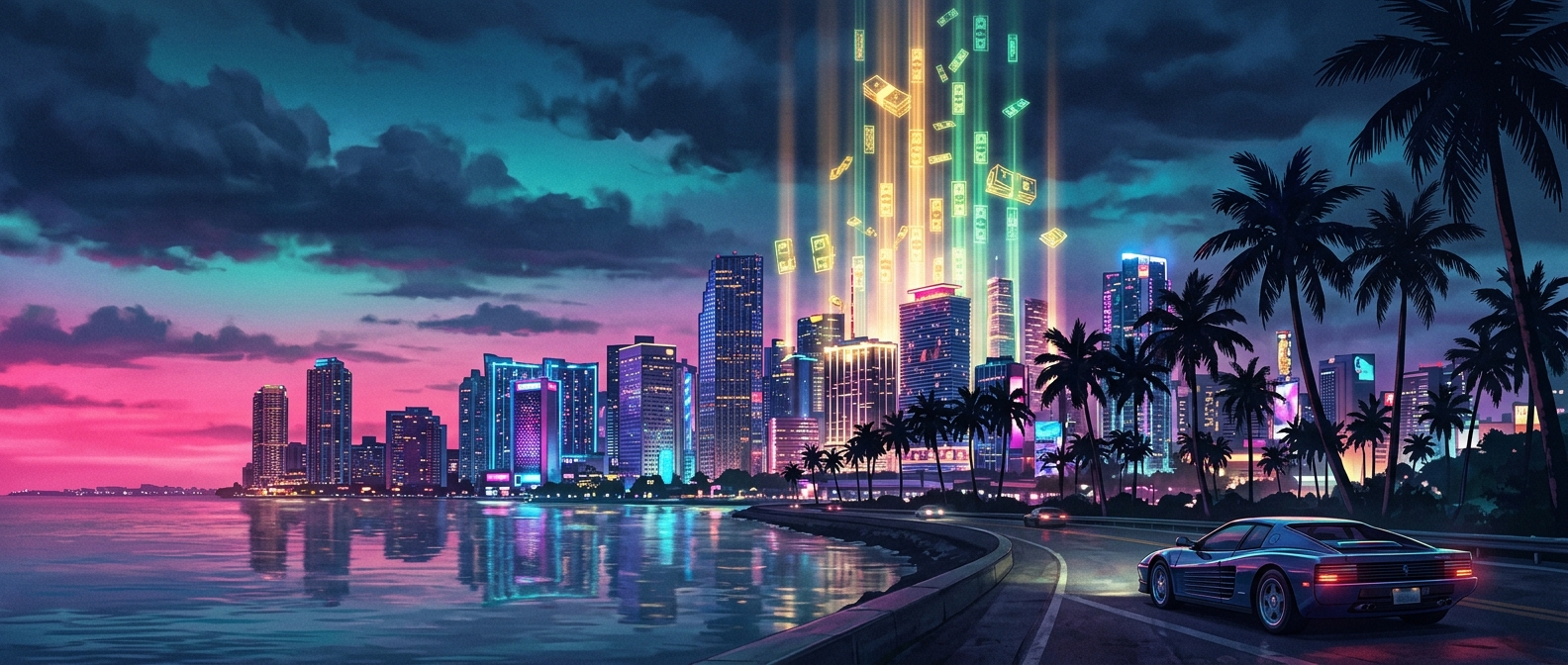
While the community is locked in on pre-order leaks and trailer countdowns, a quieter conversation is heating up around the sheer scale of what GTA VI is costing to make — and what that means for the price tag, the industry, and the studio's tolerance for risk.
A budget in the billion-dollar range
Neither Rockstar nor Take-Two has confirmed a development figure. CEO Strauss Zelnick has only described the project as "expensive." Industry analysts cited in recent reporting put the actual number somewhere between $1 billion and $1.5 billion, with some fan calculations pushing even higher.
If those estimates hold up, GTA VI wouldn't just be the most expensive video game ever made — it would arguably be the most expensive entertainment product of any kind produced to date.
A few data points being used for context:
- Some Rockstar staff have reportedly been working on the project for more than ten years.
- Modern AAA productions routinely cost hundreds of millions of dollars before marketing.
- The figure sits in the same ballpark as the GDP of several small island nations, and well above the budgets of the most expensive films and prestige TV series.
Zelnick has openly framed Take-Two's strategy as a "high-stakes" approach: betting big on a small number of blockbuster releases rather than spreading risk across many mid-budget titles.
Why costs keep climbing
The CEO has repeatedly pointed to a broader trend across the industry. Development budgets have been rising for years, driven by:
- Bigger open worlds with denser simulation and detail.
- Longer production cycles and larger global studio footprints.
- Rising salaries and tooling costs for specialized talent.
- More expensive cinematic content, performance capture and audio.
Zelnick has also said that while AI tools could eventually improve efficiency, Take-Two has not yet seen development costs come down as a result. For now, the curve is still going up.
The pressure this puts on pricing
This is where the budget story collides with the pre-order chatter. With costs this high, the question of what GTA VI will actually sell for becomes more than idle speculation.
A few signals in play right now:
- A Bank of America analyst has publicly urged Take-Two to price the game at $80, arguing it would help reset the standard for the wider industry.
- Other predictions have floated $100 as a possibility for a true "event" release.
- A leaker close to the pre-order rumors has suggested the standard edition will land somewhere between $60 and $80.
- A short-lived European retailer listing pegged the PS5 version at €69.90 before going back to "sold out."
Zelnick himself has avoided naming a number, instead repeating that the goal is to deliver value that feels meaningfully greater than the price — and to let the commercial success follow from quality rather than from squeezing the sticker.
Why it matters beyond Rockstar
If GTA VI launches at a traditional $70, it effectively caps how aggressively other publishers can push toward $80 standard editions. If it launches higher, it gives the rest of the industry cover to follow.
That's the subtext behind the analyst pressure: this single release is being treated as a pricing referendum for AAA games as a whole. Combined with a budget that may rival or exceed any other entertainment product in history, the financial stakes are arguably as dramatic as the marketing hype.
What to watch next
- Any pricing hint dropped around the next Take-Two earnings call.
- Whether retailer listings settle around the €69.90 / $70 mark or drift higher.
- Official word from Rockstar on editions and bonuses, which will reveal how aggressively Take-Two wants to push the top-tier price.
- Long-term commentary from Zelnick on whether this budget level is repeatable or a one-off bet on the franchise.
Until any of that lands, the takeaway is simple: GTA VI isn't just chasing the biggest launch in gaming history — it may already be the single most expensive piece of entertainment ever greenlit, and the price on the box will tell us a lot about where the industry goes next.
Sources